Regional Classes 2026:How Your Location Affects Car Insurance
Berlin, Offenbach and Kassel sit in the highest class, Elbe-Elster in the lowest. We show you how the GDV ranks the 413 registration districts and how to lower your premium even in an expensive region.
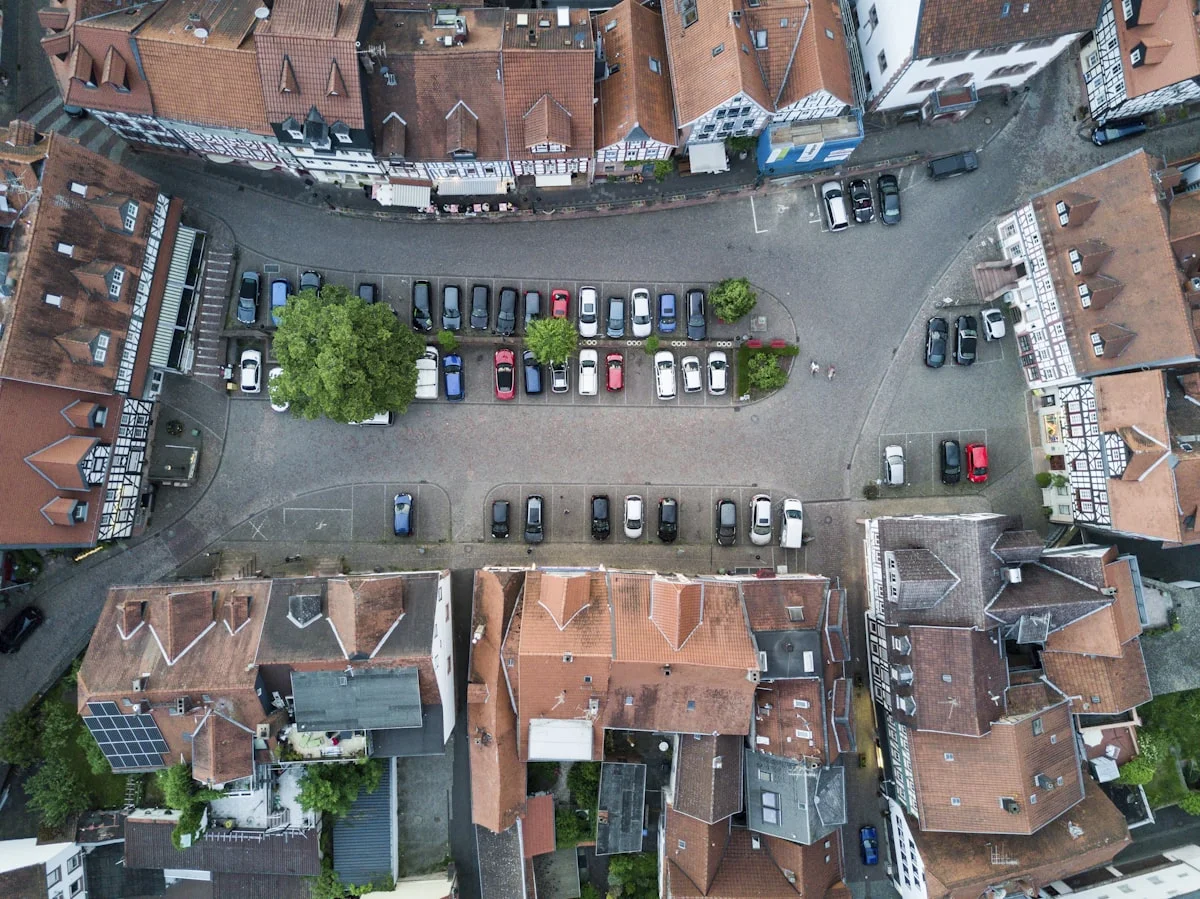
In short: The regional class shows how risky your registration district is from an insurer's point of view. Each year the GDV analyses the claims record of all 413 districts and assigns each one a class. If you live in a large city like Berlin, you tend to pay more than someone in rural Brandenburg. The GDV presented the 2026 classification on 2 September 2025; it affects around 10 million vehicle owners.
This guide explains how regional classes work, which regions are rated expensive or cheap for 2026, when a worse classification gives you a special cancellation right, and how to lower your premium even in a high class.
Key Takeaways
- ✓The regional class is based on the claims record of your registration district. The lower the class, the cheaper the premium.
- ✓The GDV ranks all 413 districts. Liability runs from class 1 to 12, Teilkasko up to 16, Vollkasko up to 9.
- ✓Berlin, Offenbach and Kassel top the 2026 liability ranking with class 12; five Brandenburg districts and Schleswig-Flensburg sit in class 1.
- ✓99 of the 413 districts were reclassified: 5.3 million owners benefit, around 5 million move up. (Source: GDV)
- ✓If the new classification raises your premium, Section 40 VVG lets you cancel within one month.
Table of Contents
1. What Are Regional Classes (Regionalklassen)?
The regional class is one of the most important factors for your premium, alongside the type class and the no-claims class. It is based on the claims record of your registration district. Each year the GDV analyses the claims data of all 413 registration districts and assigns each one a regional class. What matters is not where you drive, but where your vehicle is registered.
How the GDV calculates regional classes
The calculation rests on the claims record alone: how many claims do the vehicles registered in a district report, and how expensive are they? Several years are taken into account so that single outliers do not distort the result. The outcome is measured against the national average: Offenbach sat almost 40 percent above it for 2026, Elbe-Elster around 30 percent below.
Traffic density, theft or hail explain why a region has more claims. They are not separate inputs, though; they only show up indirectly through the claims record.
| Insurance type | Class range | Main risk factor |
|---|---|---|
| Liability (Haftpflicht) | 1 - 12 | Damage to others |
| Partial cover (Teilkasko) | 1 - 16 | Theft, wildlife, hail |
| Comprehensive (Vollkasko) | 1 - 9 | All own damage |
Good to know: The lower the regional class, the cheaper your insurance tends to be. The GDV classification is a non-binding recommendation. Each insurer decides how strongly to factor it into the premium, so reliable figures for your case only come from an individual comparison. Your district is shown by the first letters of the licence plate, for example B for Berlin or EE for Elbe-Elster.
2. Regional Class Ranges Explained
Each type of car insurance has its own regional class scale. Liability reflects accident claims, partial cover mostly theft, wildlife and weather, comprehensive the overall damage pattern. The bands below give a rough orientation for the liability scale.
- Rural Brandenburg districts
- Low traffic density
- Lowest theft rates
- Mid-sized cities
- Suburban areas
- Moderate risk levels
- Major metropolitan areas
- High traffic density
- Elevated theft/accident rates
3. Most Expensive Regions for Car Insurance
Germany's major cities carry the highest liability classes. The table shows the districts at the top of the GDV ranking for 2026, sorted by liability class.
| City/District | Liability | Teilkasko | Vollkasko |
|---|---|---|---|
| Berlin (B) | 12 | 12 | 9 |
| Offenbach (OF) | 12 | 4 | 7 |
| Kassel (KS) | 12 | 5 | 7 |
| Essen (E) | 11 | 6 | 6 |
| Frankfurt am Main (F) | 11 | 4 | 6 |
| Nuremberg (N) | 11 | 2 | 4 |
| Wuppertal (W) | 11 | 3 | 5 |
| Hamburg (HH) | 10 | 6 | 7 |
| Cologne (K) | 10 | 9 | 7 |
| Munich (M) | 10 | 7 | 7 |
Source: GDV regional class statistics 2026, prepared by the ADAC (as of September 2025). Wiesbaden also sits in liability class 12 according to the GDV. The final premium is set independently by each insurer.
Worth noting: many of these cities do far better in partial cover. Offenbach sits at Teilkasko class 4, Nuremberg even at 2. Theft and storms simply spread differently than rush-hour fender benders. The next section shows why rural drivers pay the price there instead.
Why big cities are expensive in liability
High traffic density
More vehicles on the road mean more accidents and more fender benders.
Higher theft rates
Dense areas and proximity to borders fuel vehicle theft.
Complex traffic
Cyclists, pedestrians and construction zones increase accident risk.
Expensive repairs
Workshop hourly rates in big cities tend to be higher.
4. Cheapest Regions for Car Insurance
Rural Brandenburg dominates liability class 1, joined by Schleswig-Flensburg in the north. Elbe-Elster has the best claims record nationwide, around 30 percent below average according to the GDV.
| District | State | Liability | Teilkasko | Vollkasko |
|---|---|---|---|---|
| Elbe-Elster (EE) | Brandenburg | 1 | 8 | 1 |
| Oberspreewald-Lausitz (OSL) | Brandenburg | 1 | 9 | 1 |
| Ostprignitz-Ruppin (OPR) | Brandenburg | 1 | 11 | 2 |
| Prignitz (PR) | Brandenburg | 1 | 14 | 4 |
| Uckermark (UM) | Brandenburg | 1 | 13 | 4 |
| Schleswig-Flensburg (SL) | Schleswig-Holstein | 1 | 11 | 4 |
Source: GDV regional class statistics 2026, prepared by the ADAC (as of September 2025).
The Teilkasko twist: cheap is not cheap everywhere
The table holds a surprise: exactly the districts with liability class 1 rank high in partial cover. Prignitz reaches Teilkasko class 14, Uckermark 13. Wildlife collisions, hail and marten bites are among the most frequent Teilkasko claims, and they hit rural regions disproportionately. If you live in the countryside and want Kasko cover, compare the total package. Cheap liability does not automatically mean a cheap policy overall.
Why liability is cheaper in the countryside
Low traffic density
Fewer cars on the road mean fewer accidents and lower claim rates.
Minimal theft
Rural areas have very low vehicle theft rates.
Secure parking
More garages and private parking reduce theft and vandalism risk.
Lower repair costs
Workshop rates in rural areas are typically lower than in cities.
5. Regional Class Changes for 2026
The GDV presented the 2026 figures on 2 September 2025. Of the 413 districts, 99 were reclassified in liability insurance while 314 stay unchanged. The full directory is published by the GDV and prepared as a searchable table by the ADAC.
Around 5.3 million vehicle owners benefit from a lower liability class, mostly in rural regions.
About 5 million owners move up. Hesse is hit hardest: the class rises for almost one in four insured drivers there, according to the GDV.
For a good three quarters of all districts, nothing changes in liability.
In partial and comprehensive cover, around 2.6 million owners improve and 2.1 million are rated higher.
Notable single cases: Kassel climbed one class and now shares the liability top group with Berlin and Offenbach. Hamburg and Munich each improved by one class to 10. Berlin moved up one step in Teilkasko to class 12. (Source: ADAC preparation of the GDV data)
Next round: The GDV is expected to publish the 2027 regional classes in early September 2026. The 2026 figures arrived on 2 September 2025. We will update this guide as soon as the new data is out.
Note: Even if your regional class stays the same, your premium can rise. Insurers also factor in rising claim and repair costs. According to Finanztip, it pays to review and compare your policy every year.
6. How to Save in an Expensive Region
Even if you live in an expensive region, you can lower your premium noticeably. The following approaches help regardless of your regional class.
Compare tariffs every year
Insurers price the same district differently. An independent comparison shows who calculates your location favourably. This is usually where the greatest savings lie.
Consider a telematics tariff
If you drive carefully, a telematics tariff can lower your premium regardless of the regional class. This can be especially worthwhile for younger drivers.
Declare a secure parking space
A garage or lockable space reduces theft and vandalism risk. Many insurers reward this with a discount.
Adjust your deductible
A higher deductible on comprehensive cover lowers the premium. Choose an amount you could comfortably pay in a claim.
Watch the type class when buying
Alongside the regional class, the type class counts. A model with a low type class can partly offset a high regional class.
More on this topic: Learn how the car model affects the premium in our guide to Type Classes 2026, and see the full picture in our Car Insurance Germany Guide 2026.
7. Special Cancellation Right When Your Class Goes Up
If your district moves into a higher regional class and your premium rises as a result, you do not have to accept it. Under Section 40 (1) VVG you may cancel when the insurer raises the premium through an adjustment clause without a corresponding change in cover. The deadline is one month from receiving the notification; the cancellation takes effect at the earliest when the increase would apply.
In practice the reclassification usually hides in the premium invoice that arrives in autumn or winter. Compare the new premium with last year's. A higher amount for the same cover means your one-month window is already running.
How to proceed
- 1Compare the premium invoice with last year. An increase without extra cover opens the special cancellation right.
- 2Note the deadline: one month from receipt of the notification. Do not wait until the last week.
- 3Secure the new tariff first, then cancel. Liability cover is mandatory in Germany; there must be no gap.
- 4Cancel in writing and get written confirmation of both the cancellation and the new policy.
Without the special right, the regular route remains: for policies running per calendar year, notice is usually due by 30 November. Our Car Insurance Germany Guide covers the switching process step by step.
8. Frequently Asked Questions
What are regional classes in German car insurance?
Regional classes (Regionalklassen) assign each of the 413 vehicle registration districts in Germany to a risk level. The classification is based on the district's claims record, meaning how many claims are reported and how expensive they are. Districts with frequent or costly claims have higher regional classes and therefore higher premiums. The GDV recalculates the classification every year. (Source: GDV)
Which cities have the highest regional class in 2026?
In liability insurance, Berlin, Offenbach am Main and Kassel top the 2026 ranking with class 12; Wiesbaden also sits in this group according to the GDV. Essen, Wuppertal, Nuremberg and Frankfurt am Main follow with class 11, while Hamburg, Cologne and Munich stand at class 10. Offenbach has the worst claims record in Germany, almost 40 percent above the national average. (Source: GDV, ADAC)
Which regions have the cheapest car insurance in Germany?
The lowest liability classes in 2026 are concentrated in Brandenburg: Elbe-Elster, Prignitz, Uckermark, Ostprignitz-Ruppin and Oberspreewald-Lausitz all reach class 1, as does Schleswig-Flensburg in the north. Elbe-Elster has the best claims record nationwide, around 30 percent below average. In partial cover (Teilkasko), however, the same districts rank much worse because of wildlife and hail claims. (Source: GDV, ADAC)
How much can the regional class affect my premium?
The regional class is one of the most important premium factors alongside the type class and the no-claims class. A Verivox sample calculation (as of June 2025) puts the gap between Berlin and Muenster for the same driver at 29 percent in liability and 58 percent in comprehensive cover. The exact effect depends on your insurer and tariff and only shows up in an individual comparison. (Source: Verivox, GDV)
How many drivers are affected by the 2026 changes?
For 2026 the GDV reclassified 99 of the 413 registration districts in liability insurance. Around 5.3 million vehicle owners in 51 districts benefit from better classes, while about 5 million in 48 districts move up. Nothing changes for 314 districts. In the Kasko lines, roughly 2.6 million owners improve and 2.1 million are rated higher. (Source: GDV)
Can I register my car elsewhere to save money?
No, you cannot choose your registration district freely. Under Section 75 of the German Vehicle Registration Ordinance (FZV), the authority at the keeper's place of residence is responsible; with several residences, the main residence under registration law counts. Only an actual move or a different keeper, for example a family member whose main residence is in a cheaper district, changes the district. Clarify such a keeper arrangement with the insurer first, otherwise you risk problems in a claim. (Source: Section 75 FZV)
When are the regional classes updated?
The GDV recalculates the regional classes every year based on several years of claims data. The 2026 classification was presented on 2 September 2025; the 2027 figures are expected in early September 2026. New classes apply immediately to new policies and to existing policies from the next insurance year. The classification is a non-binding recommendation; each insurer decides whether to adopt it. (Source: GDV, ADAC)
Do I have a special cancellation right if my regional class goes up?
Yes, if the new classification raises your premium without a corresponding change in cover. Under Section 40 (1) of the German Insurance Contract Act (VVG) you may then cancel within one month of receiving the notification, effective at the earliest when the increase would take effect. The same applies if your regional class stays put but the insurer raises the premium through an adjustment clause. Line up the new policy before you cancel so your cover continues without a gap. (Source: Section 40 VVG)
What can I do if I live in an expensive region?
Even in a high regional class you can lower your premium. An independent tariff comparison shows which insurer prices your district more favourably. In addition, a telematics tariff, a secure parking space, a low type class when buying a car and a higher deductible all help. An annual comparison reveals the greatest savings potential. (Source: Finanztip, Verbraucherzentrale)
Compare Car Insurance for Your Region
Check which insurer prices your registration district favourably. The comparison takes your regional class into account, and it is free and non-binding.
AdvertisingThis comparison calculator is provided by our partner. If a contract is concluded through it, we receive a commission.
Related Car Insurance Guides
This guide provides general information and does not replace individual advice.