GAS
COMPARISON GERMANY
Independent Comparison Portal
Multiple Providers • Save up to €200 Annually
English Support • Independent • Perfect for Expats
Key takeaways
- German households in single-family homes pay an average of 11.10 ct/kWh for gas in 2026; multi-family buildings average 10.87 ct/kWh (BDEW, April 2026).
- Basic supply (Grundversorgung) is the expensive default, typically 13 to 16 ct/kWh. Leaving it saves most households several hundred euros a year.
- Since 1 January 2026 the technical provider switch must complete within 24 hours (Section 20a EnWG). The whole procedure may not take longer than three weeks, and it costs nothing.
- The CO2 price adds about 1.1 ct/kWh in 2026 and rises on a fixed schedule; VAT on gas is back at 19 percent.
- Supply is guaranteed during a switch. Your heating never goes off because you changed providers.
Written by the checkeverything.de Redaktion. Last updated: 13 July 2026.
What You Should Know
Professional Gas Comparison
Germany's advanced gas calculator
Advertisement - Check24 Partner ID: 195949 |We receive a commission for concluded contracts. All comparisons remain independent and unbiased.
Gas Prices in Germany in 2026
The average household in a single-family home pays 11.10 ct/kWh for gas in 2026; in multi-family buildings the average is 10.87 ct/kWh. Both figures come from the BDEW gas price analysis published in April 2026. Competitive new-customer tariffs sit below that average, while basic supply (Grundversorgung) mostly costs between 13 and 16 ct/kWh. That spread is the whole reason comparing pays off.
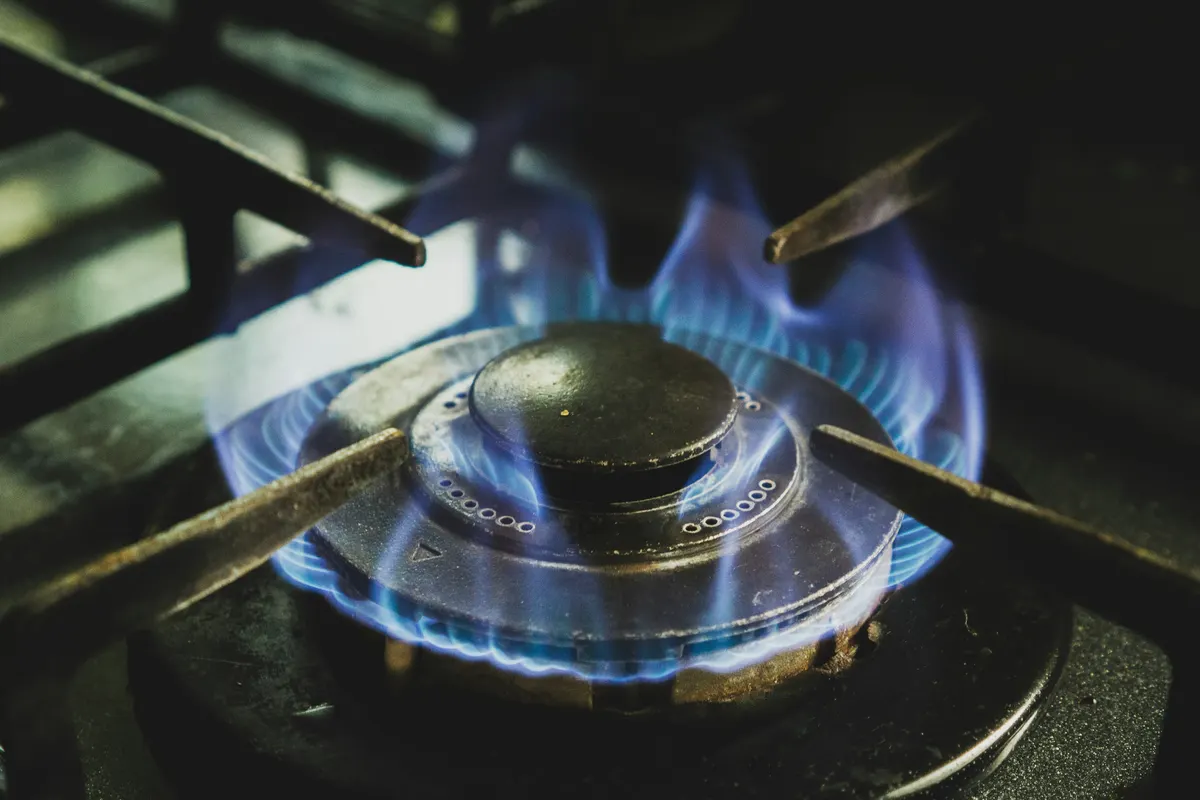
Photo by KWON JUNHO on Unsplash
Where the money goes: a bit under half of the price is energy procurement and sales, roughly a quarter is grid fees, and about a third is state-set components. The largest moving part in that last block is the CO2 price, which is auctioned in a corridor of 55 to 65 euros per tonne in 2026, roughly 1.1 ct/kWh on your bill. The Federal Environment Agency publishes the schedule in English. VAT on gas has been back at the regular 19 percent since April 2024.
If you arrived in Germany during the energy crisis: the emergency price cap (Gaspreisbremse) ended on 31 December 2023, so what you pay now is a market price. Prices are well below the 2022 peak, but the pre-crisis level of around six cents is not coming back, mainly because of the CO2 schedule. The switching rules improved instead. Under Section 20a EnWG, the whole procedure is capped at three weeks, and since 1 January 2026 the technical switch itself must happen within 24 hours.
If you have never touched your gas contract, you are probably in basic supply and paying the top of the range. The Verbraucherzentrale keeps plain-language advice on tariffs and switching. The short version: a household using 15,000 kWh a year typically saves 600 euros or more by moving from basic supply to a competitive tariff. Twenty minutes of paperwork, one of the few three-digit savings left in a German household budget.
How to Switch Gas Provider in Germany
Understanding Gas Usage
- Annual consumption: Average home uses 12,000-20,000 kWh
- Basic charge: Monthly fixed cost (€5-25)
- kWh price: Price per unit consumed (7-16 cents in 2026, market average 11.10)
- Heating systems: Boilers, central heating
- Hot water: Gas-powered water heating
Switching Process
- 1. Find your gas meter: Meter number and annual consumption
- 2. Compare tariffs: Use our comparison tool above
- 3. Choose new provider: Consider price and contract terms
- 4. Sign contract: New provider handles cancellation
- 5. The switch completes: Technically within 24 hours (law since 2026); your start date follows your old contract's notice period
Money-Saving Tips:
Avoid basic tariff: Often 20-30% more expensive
Annual payment: Get discounts for yearly payments
Price guarantee: Protection against price increases
No advance payments: Avoid financial risk
Check switching bonuses: Often worth €50-150
Annual switching: Always get best deals
Bio-gas option: Environmentally friendly gas
Read terms carefully: Avoid hidden costs
Typical Gas Costs in Germany (2026)
Small apartment (8,000 kWh/year)
1-2 people, hot water only
€700-1,000
per year
Medium house (15,000 kWh/year)
3-4 people, heating + hot water
€1,300-1,800
per year
Large house (25,000 kWh/year)
5+ people, full heating system
€2,100-2,900
per year
Ranges computed from 2026 market prices (BDEW average 11.10 ct/kWh for single-family homes; competitive tariffs below, basic supply above) plus a typical base fee. Your bill depends on region, consumption and tariff.
Gas Heating in Germany - What You Need to Know
German Heating Systems
- • Central heating very common
- • Excellent home insulation
- • Long, cold winters
- • Wide gas network coverage
- • Thermostatic valve system
- • Heat pumps gaining popularity
Heating Tips for Expats
- • Heating costs 70-80% of energy bills
- • Use thermostats efficiently
- • Lower temperature at night
- • Don't heat unused rooms
- • Regular maintenance saves money
- • Consider bio-gas for sustainability
Important: Gas heating costs are a major expense in Germany. Proper thermostat use and efficient heating habits can save hundreds of euros annually. Consider a programmable thermostat and learn to use the German heating system effectively.
Expert Answers
Common questions about gas comparison in Germany
Can I switch gas providers as a tenant?
YES, if you have your own meter! You can switch if you have your own gas meter and receive bills directly.
Cannot switch: If heating is included in rent (Inklusivmiete), the landlord controls the contract. Check your tenancy agreement or ask your landlord to confirm which arrangement applies to you.
Will there be a gas supply interruption?
100% Guaranteed - No Interruption
Gas supply is guaranteed: Your heating and hot water continue uninterrupted during the switch. German law (§ 36 EnWG) obliges the network operator to maintain supply regardless of which commercial provider you choose.
What is bio-gas and is it worth the cost?
Bio-gas is eco-friendly gas from renewable sources like agricultural waste. Typically 10-20% more expensive but supports climate goals.
Worth comparing: Some bio-gas tariffs are competitively priced against conventional gas, particularly when switching bonuses are factored in. Use the comparison tool to see current bio-gas offers alongside standard tariffs.
More questions, short answers
How much does gas cost in Germany in 2026?
Single-family homes average 11.10 ct/kWh, multi-family buildings 10.87 ct/kWh (BDEW, April 2026). Competitive tariffs are often several cents cheaper. Basic supply mostly sits between 13 and 16 ct/kWh, which is why leaving it is the single biggest lever.
How long does switching gas providers take?
The procedure is capped at three weeks by law, and since 1 January 2026 the technical switch must complete within 24 hours (Section 20a EnWG). Your start date usually depends on your old contract's notice period. Switching is free.
Why is my gas bill so high?
Usually one of three things: you are still in basic supply, your monthly advance (Abschlag) no longer matches your consumption, or state components rose. The CO2 price adds roughly 1.1 ct/kWh in 2026 and VAT is back at 19 percent. Check the tariff name on your bill first.
Is there still a government cap on gas prices?
No. The Gaspreisbremse ended on 31 December 2023. Prices are market prices again, and the CO2 price rises on a fixed schedule through 2027, so waiting for state relief is not a strategy. Comparing is.
Related Articles
Electricity Prices Germany 2026
What households pay for power in 2026, and how to pay less.
DSL & Internet Comparison
The same switching habit works for your internet contract too.
Personal Loan Comparison
Compare loan conditions in Germany before an energy-related purchase.
Credit Card Comparison
Where card payments make sense in Germany, and where they do not.
Find a Better Gas Tariff Today
Compare providers independently and see whether you could save up to €200 annually. No obligation, no registration required.