Green Electricity in Germany 2026: spot the real thing and switch
Genuine green electricity is recognised by its seal, not by the word "eco". The Grüner Strom Label and ok-power both require a provider to help fund new wind and solar plants. This guide shows how to see through greenwashing, what green power costs in 2026, and how switching works.
Last updated: 14 July 2026 | checkeverything.de Redaktion
Key takeaways
- 1.Real green power carries a strict seal: the Grüner Strom Label or ok-power. Both require the provider to fund new renewable plants.
- 2.Green electricity is usually not more expensive. The 2026 household average is about 37.0 ct/kWh (BDEW); many green tariffs match it.
- 3.In 2024, 54.4 % of German electricity use came from renewables (UBA); measured by generation alone it was 59.4 % (Destatis).
- 4.Your socket always carries the same grid mix. A green tariff counts through guarantees of origin, not the physical flow.
- 5.Be wary of tariffs sold on guarantees of origin alone: that is greenwashing and funds no new plant.
Germany’s green power market in 2026
Renewables are now the backbone of German electricity. In 2024 they covered 54.4 % of gross power consumption according to the Federal Environment Agency, and 59.4 % of domestic generation according to the Federal Statistical Office. Wind and solar carry most of it.
| Source | Share 2024 | Note |
|---|---|---|
| Wind (onshore and offshore) | 31.5 % | Germany’s single biggest source |
| Solar (photovoltaic) | 13.8 % | Around 4.8 million systems by end of 2025 |
| Biomass | approx. 8 % | Baseload-capable, land-use trade-offs |
| Hydropower | 4.7 % | Little room left to expand |
Shares of electricity generation 2024, rounded. Sources: Federal Statistical Office and Federal Environment Agency. By the end of 2025 Germany had roughly 4.8 million solar systems and about 31,100 wind turbines.
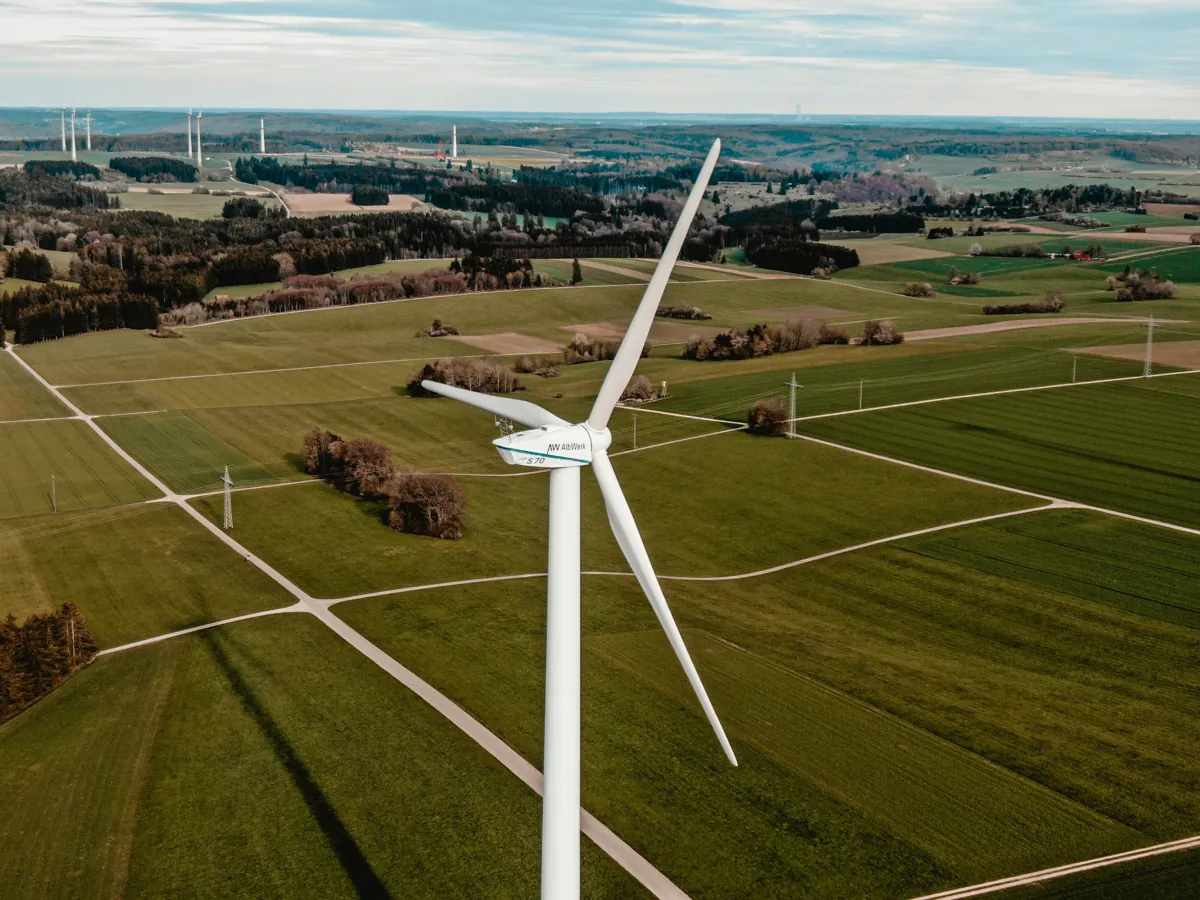
Photo: Marcel Strauß / Unsplash
What does green electricity cost?
The stubborn myth is that green power is an expensive luxury. It is not, at least not any more. The average German household price in 2026 is about 37.0 ct/kWh according to the BDEW price analysis, and many certified green tariffs land at that level or slightly below, because wind and solar are now cheap to generate.
The genuinely expensive option is the local basic supply (Grundversorgung), where households end up by default if they never switch. That is where the savings sit: moving from the basic supply to a competitive green tariff usually saves more than giving up green power ever would. If price is your only concern, use the general electricity comparison. If you want verified green power, stay here.
In short: green electricity rarely costs you more. What you pay depends more on your old contract than on the colour of the power.
Why green electricity is a matter of balance
Electricity in the grid cannot be told apart. Whatever your tariff, your socket carries the physical mix of every power plant in the region. Green electricity therefore works through a balance, not through separate wires. The tool for that is the guarantee of origin (Herkunftsnachweis).
A guarantee of origin is a digital certificate for one megawatt-hour of renewable power. The Federal Environment Agency runs the register and cancels each certificate once the power has been sold as green, which prevents double counting.
The catch: these certificates trade separately from the electricity. A supplier can buy cheap ones from old Scandinavian hydro plants and relabel conventional grey power as green.
So a guarantee of origin alone is not enough. It shows green power was generated somewhere, not that your contract funds new plants. Only strict seals guarantee that added benefit.
Certification seals compared
The difference between seals comes down to one question: does money flow into new plants? A tariff that funds new wind and solar has real benefit. One that only reshuffles guarantees of origin does not.
Grüner Strom Label
StrictestRequires a fixed contribution into new renewable plants (at least 0.5 ct/kWh for private customers); backed by environmental groups; no coal or nuclear links.
ok-power
Strict100 % renewable and the provider must actively fund new capacity. Run by EnergieVision e.V. (Öko-Institut, consumer association NRW).
TÜV certificates
MediumA broad category (TÜV Süd, Nord, Rheinland) with very different criteria. Check what each standard actually demands.
Guarantees of origin only
No added benefitTradable certificates, often from old hydro plants. No money goes into new plants. This is where greenwashing hides.
Criteria per the seal bodies: Grüner Strom Label e.V. and ok-power (EnergieVision e.V.). As of July 2026.
How to switch to green electricity
Have last year’s consumption ready (a two-person household uses about 3,000 kWh, three people around 3,500 kWh). In the comparison, filter for certified green power first, then check the contract: a term of no more than twelve months, a price guarantee on the energy rate, no prepayment. The new provider cancels your old contract, and supply never stops because the grid connection stays the same.
Biggest effect at high consumption
A heat pump or an electric car raises your usage sharply, which multiplies the benefit of green power. If you are planning your own solar system, financing often runs through the KfW 270 solar loan.
Compare green tariffs for your area
Enter your postal code and yearly consumption, then filter the results for certified green electricity. The comparison is free and non-binding.
Advertising disclosure: We take part in the CHECK24.net partner programme and receive a commission for concluded contracts. This adds no cost for you.
More in the CHECK24 privacy policy.
Frequently asked questions
How do I recognise genuinely green electricity in Germany?
Is green electricity more expensive than conventional power?
Does actual green electricity reach my socket?
What is a guarantee of origin (Herkunftsnachweis)?
Which green electricity seal is best?
How much CO2 do I save with green electricity?
How long does switching take?
Sources and status
- Federal Environment Agency: Renewable energies in figures (54.4 % of gross power use 2024)
- Federal Statistical Office (2024 generation 59.4 % renewable, wind 31.5 %)
- BDEW electricity price analysis (household price 37.0 ct/kWh, 2026)
- Grüner Strom Label e.V. and ok-power (EnergieVision e.V.) (seal criteria)